

Read this article in Spanish.
Featured image: A fountain from Hanbury Botanical Gardens with aquatic plants.
– – –
Beneath winding roads and densely packed Ligurian neighborhoods, the Hanbury Botanical Gardens covers the face of a hill, which descends into the ocean. The gardens’ routes wind down the hill, one route for walking down and another for returning up. A hot dry steep start turns into winding shady breezy paths, and with the option of dipping down into shady forests with running water or passing through ruins, mazes, citrus trees, and later a small café with an impressive view of the ocean. Despite its international origins and notoriety, you get a sense that it is a place of respite for the local Italians.

Mortola inferiore, Ventimiglia, IT, Jun 10, 2018 [1]
The origins of this botanical garden, or giardini botanici, are not entirely Italian but instead British. It was founded 1867 by Thomas Hanbury, an English man with business successes in China, and with the help of his brother Daniel Hanbury, a pharmacist with knowledge of medicinal plants. Thomas purchased the land which had included the ancient ruin ‘Palazzo Orengo’ [2]. It seems it was later remodeled into a modern building with the same name [3]. Other renown botanists, gardeners, and scientists from around Europe joined in the endeavor [4]. In time, the garden turned from a hill on the sea to a museum of botanical wonders from exotic locations.
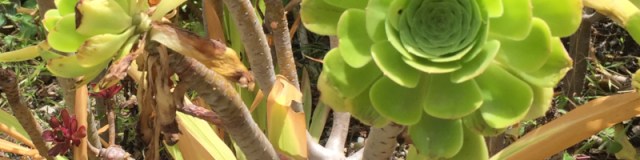
When one walks around the garden, they encounter unlikely neighbors. Plants from Mexico, South Africa, Morocco, and Italy sit side by side. Their adaptations to Mediterranean-like climates similar to those in Liguria make them blend seamlessly together. A trained eye would be required to see that these plants are recent migrants, who travelled with explorers across the seas during the era of burgeoning transportation. Luckily, the gardens’ caretakers, currently the University of Genoa, label their exotic specimens and their origins.


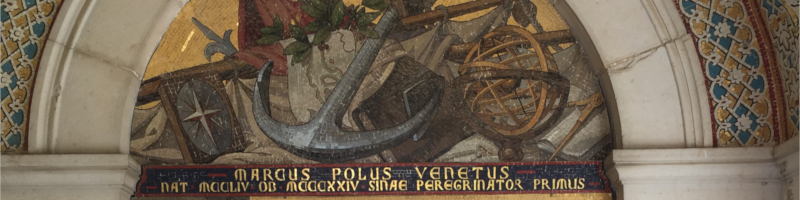
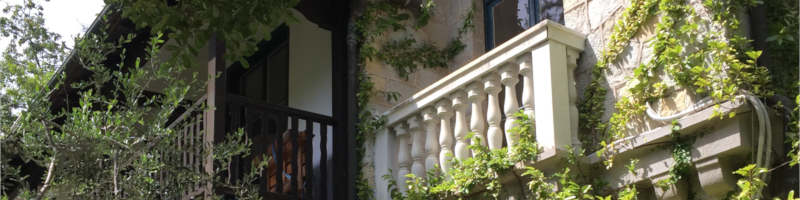
Despite the destruction that naval bombardments by the US during WWII brought to the gardens, remnants of its original architecture are preserved. A moroccan styled monument, which houses the grave of one of the Hanbury brothers, stands below a marbled look-out. A building with various carvings and locked doors show Marco Polo, an explorer whose presence is fit in this Italian garden of worldly tastes. An herbarium, which was destroyed and then remodeled to replicate the original architecture.

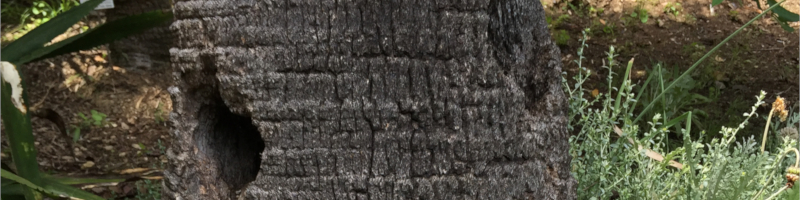
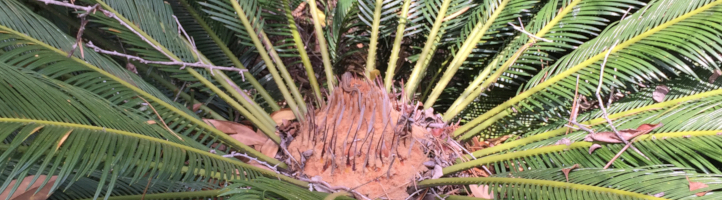
Despite its manicured nature, the garden is home to the wild. Various lizards can be found traveling the sunlit avenues with you. One was found perched in the center of a sago-palm, Cycas revoluta, taking place of its cone, which easily identifies it as a gymnosperm. Various birds could be heard. Familiar weeds like plantain, Plantago major, remind us that even the toughest plants find a way to share the space with the celebrities of the plant kingdom.

Author: Gustavo Meneses
Published: 2021-02-20
Revised: 2024-03-26
References
[1] Mortola inferiore: definition, Sensagent. Website. Accessed Jan 19, 2023. http://dictionary.sensagent.com/Mortola%20Inferiore/it-it/
[2] Campodonico, PG. Zappa, E. Carboni, AL. Guglielmi, D. Mariotti, MG. Guidi, S. “Hanbury Botanic Garden.” Universitá degli Studi di Genova, Centro di servizio di Ateneo per i Giardini Botanici Hanbury. Publication.
[3] “Hanbury Palace”. Hanbury Botanic Garden, University of Genoa. Website. Accessed Jan 19, 2023. https://giardinihanbury.com/en/gbh-institution/structures/hanbury-palace
[4] Queston-Riston, Charles. “The English Garden Abroad”. “English culture”, Hanbury Botanic Garden, University of Genoa. Website. Accessed Jan 19, 2023. https://www.giardinihanbury.com/en/node/665
 PRO - Plant Research Organization
One reply to “Hanbury Botanical Gardens, Ventimiglia, Italy”