


For many who reach the end of their careers, the word horticulture conjures relaxing and rewarding sessions in their garden. For the most part, horticulture embodies this. For the wealthy, the hard-worked, and the passionate, horticulture has been a means to enjoy the beauty of landscape plants, the literal fruits of your labor, and the tranquility that only a living green-scape can provide. Although, once we begin to delve into horticulture in a larger sense or educate ourselves about serious operations such as landscape design in urban environments, production of food crops and processing of plant extracts, we notice the impacts of these activities on the environment and its consequences on life are profound.
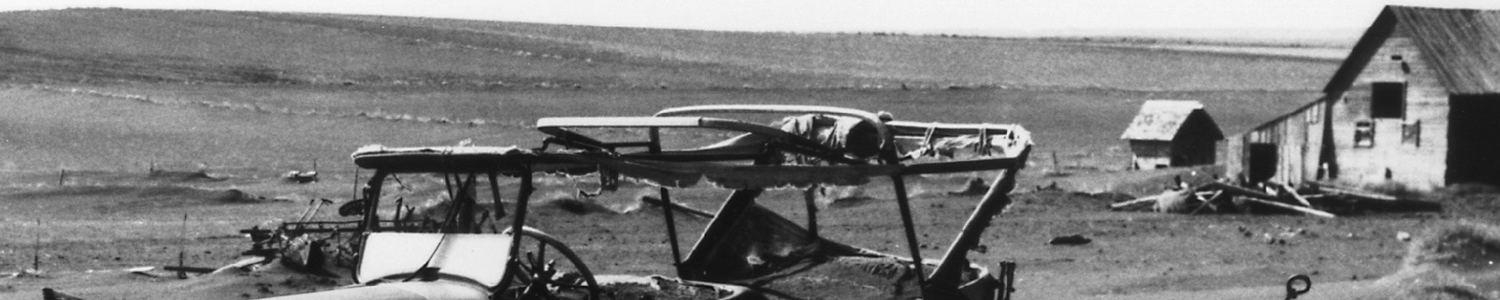
A career in horticulture may appear to be an outwardly green profession, an allure that attracts people looking for fulfilling careers that embody their passion for the nature and conserving the environment. There are many in horticulture that are doing this successfully and many that will, but new scientific frontiers and industry practices have turned this ancient profession into one of life’s most intimate enemies. By having a close proximity to the natural environment, the impact of our decisions on the field increases.

To argue whether a practice in horticulture is damaging to the health of the environment and to humans has been contested so often and refuted by people with vested interests in related industries that it has eroded some people’s trust in industrial food production due to the apparent damage to our environment and the ongoing dissonance within scientific communities. On one hand, there are skeptics who appeal to emotions alone who may protest vehemently on any platform and strive for eating only organic foods, which is in fact a term that is legally protected in the United States, regulated to allow certain synthetic compounds deemed essential for crop production and allows the use of organic chemical compounds known to have harmful effects on the environment. At the opposite of the spectrum, there are optimists who may work in the field or one related, admire science and scientists, but are less likely to pursue inquiry into matters that they regard anti-scientific due to prejudices and stereotypes that are often made about people who are concerned about these matters. An example is the conundrum of genetic modification, which is perhaps the most controversial subject in the life sciences due to its potential promise of addressing genetic diseases but also attempts to modify the most essential and basic components within living organisms without a concern for the longterm ramifications or even its ethical dilemma.

Beyond these large and apparent issues, there are a multitude of practices such as the use of plastic mulches and introduction of invasive species, which may seem at one moment inert but may leave an intergenerational consequence. Many of these problems are also the fruit of ignorance and from the best of intentions, and only solvable through constructive teamwork and communication strategies. There are some battles that have to be forfeited in order to focus energy on more timely matters, and in some cases weather events can drastically increase the rate of change in a system which requires a consistent vigilance but also a quick response.

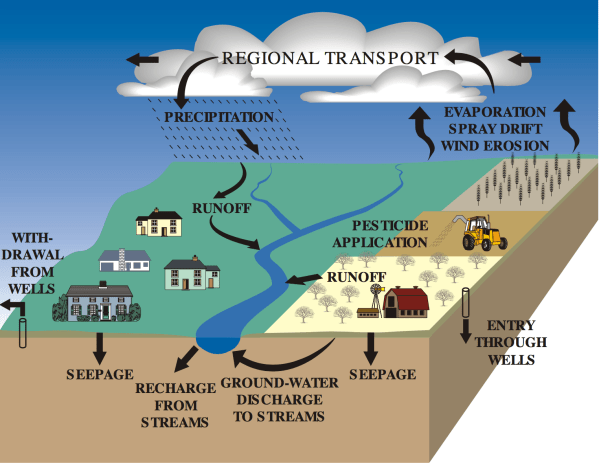
Education into these matters is important, and we hope to provide some insights, but because of the complexity of this issue and its effects on our bodies’ energy to write and document these phenomenon, organizing against a disordered and complex system with degenerative effects is difficult. Our hope is to inspire self-learning and motivate inquiry guided by constructive principles.
Further Reading
U.S. Geological Survey, Investigating the Environmental Effects of Agriculture Practices on Natural Resources, Fact Sheet 2007-3001. https://pubs.usgs.gov/fs/2007/3001/pdf/508FS2007_3001.pdf
Munn, Mark D. et al, Pesticide Toxicity Index for Freshwater Aquatic Organisms, 2nd Edition, National Water-Quality Assessment Program, Scientific Investigations Report 2006-5148. https://pubs.usgs.gov/sir/2006/5148/sir_2006-5148.pdf
Organic Materials Review Institute, OMRI Lists. https://www.omri.org/omri-lists
Sources
Dust Bowl – Dallas, South Dakota 1936, USDA, May 1936, Wikipedia. https://commons.wikimedia.org/wiki/File:Dust_Bowl_-_Dallas,_South_Dakota_1936.jpg
Inoculation des plantes avec des bactéries fixatrices d’azote et transfert dans les tubes stériles IJPB Versailles-32-clic, Jean Weber, INRA, https://flickr.com/photos/135897188@N04/22752273859
Trees and other plants covered in kudzu in Floyd Bennett Field, Wikipedia, User: Rhododendrites. https://commons.wikimedia.org/wiki/File:Kudzu_graveyard_(40580p).jpg
Carl E. Thodal, U.S. Geological Survey, and Jon Carpenter and Charles W. Moses, Nevada Department of Agriculture, Figure 1 (Modified from Gilliom and others, 2006.) https://pubs.usgs.gov/fs/2009/3093/
 PRO - Plant Research Organization

.jpg)