

Read this article in Spanish.
Featured image: A pine tree growing over the shore of a beach in Brela, Croatia.
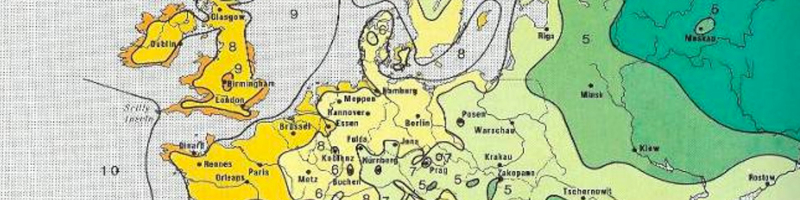

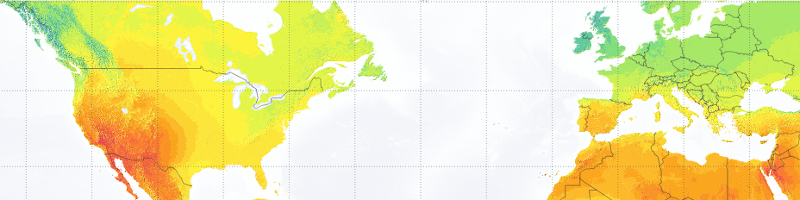

Would it surprise you if you were told the sunlight in northern Italy is the same as in Wisconsin? Or that Illinois and Spain have the same hours of daylight? Did you know winter in Norway is warmer than Minnesota, but is north of Manitoba, Canada? Or that winters in Chicago can be as cold as winters in Riga, Latvia?

This was not always the case. In Ice Age Europe, glaciers covered the northern portions and reindeer roamed Italy. Our perception of these lands are influenced by their recent climactic conditions.
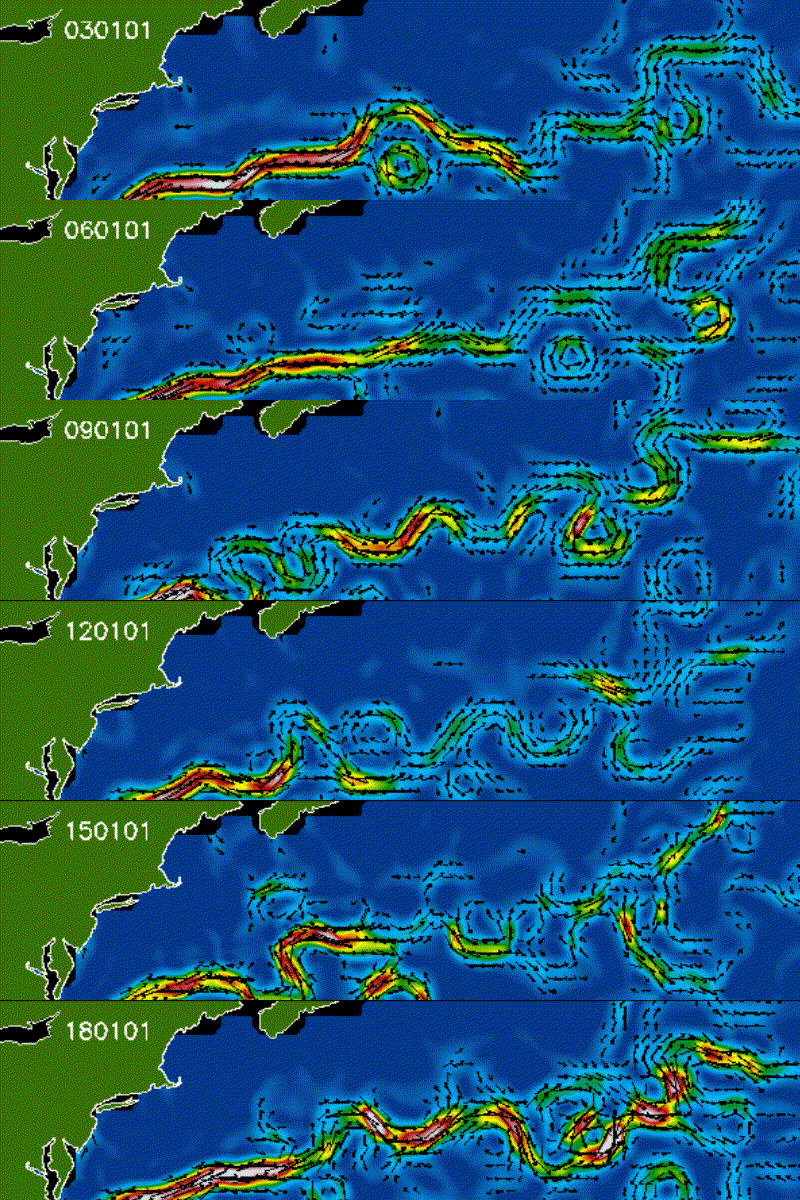
Europe is primarily controlled by a mix of a warming Gulf Stream current and a greater proximity to the North Pole. In comparison to North America, Europe is cooler in the summer, milder in the winter, and experiences more drastic daylight changes between the seasons.
Warming of the North Pole and increase of fresh meltwater is feared by some to influence the Gulf Stream. Scientists are monitoring to determine whether one of Europe’s most important sources of warmth and moisture will change.
Plants and regional identity
For many, plants are symbols of culture. They represent ideas, traditions and allegiances. Some might associate pine trees or other conifers with northern regions. However, in Europe, conifers live comfortably in the Mediterranean. The landscape shows a much more complex vision of a unique landmass, which has been in the making for 1000s of years and is now in the process of drastic changes.
Beech tree

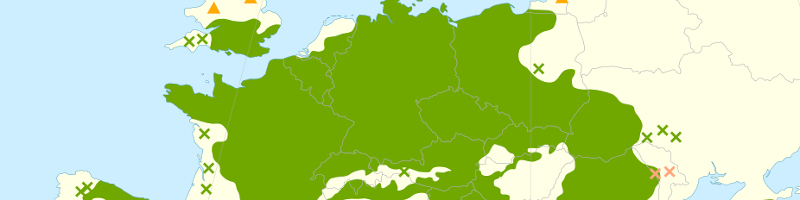
The word beech is said to be the origin of the word ‘book’, some thought this was due to the common practice of writing on the smooth bark but scholars say it is because prehistoric people used the wood for engraving [2][3]. This practice is now considered unsightly and damages trees. There are sayings in German, which warn people to stay away from Oaks and close to Beech trees during thunderstorms [4].
Figs

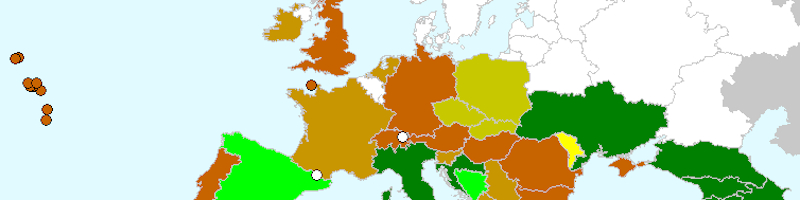


Figs are an example of species, which would’ve existed along with humans before the migrations out of Africa. Figs are an example of plants restricted to certain regions, but aware by people outside of its range due to its mention in popular literature. In southern Europe, they’ve been cultivated for thousands of years near the mediterranean. Archeologists and botanists distinguish these ancient remains of the cultivated species as archeophytes [8].
Conifers
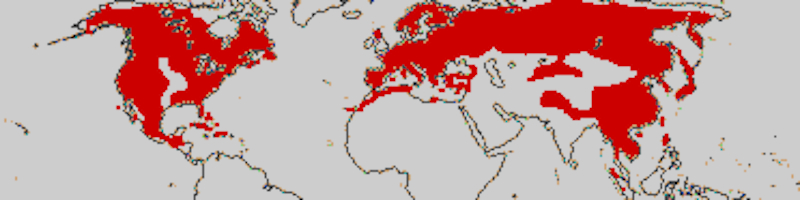


Our imagination may influence us to envision christmas-like scenery when thinking of pine trees (Pinus spp.), even though most Christmas trees sold commercially in the US are firs (Abies spp.) and spruces (Picea spp.). When uncovering the ancient reforestation of glacial Europe, it may seem more reasonable to associate the Mediterranean with coniferous trees.
These associations arrived more recently during a time when Europe was divided by a depleted but infra-structurally developed empire in the south and a forested north and central Europe void of any over consumption.
Altered landscape
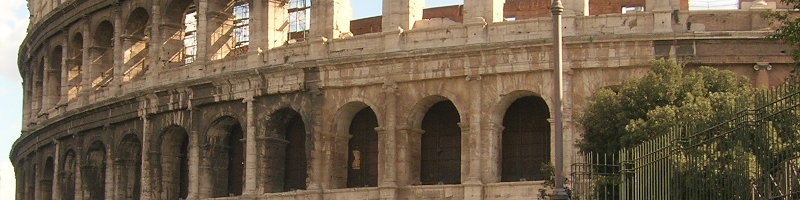
Courtesy of Javier Meneses.
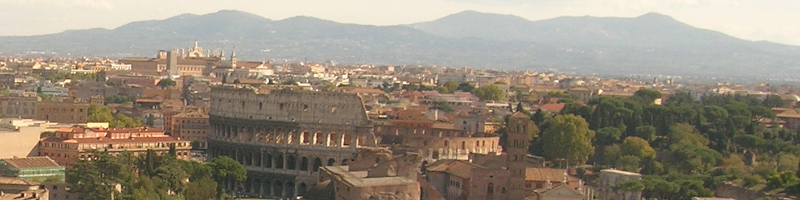
Courtesy of Javier Meneses.
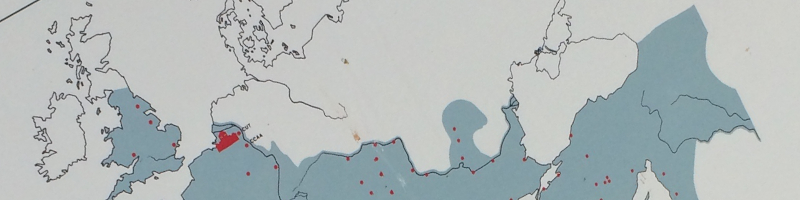
Archeologists have sampled ancient kilns in southern Europe, which burned charcoal in order to fire pottery, and can identify species of trees in the sequence they were depleted. At first, trees from the valleys were used then species from the mountains. Interestingly, today these regions are barren and void of large forests [9].
The dry conditions we see in southern Europe might be a product of human activity. Beginning thousands of years before the Roman Empire, humans in the region harvested wood for housing, complicated construction projects, weapons, tools, and charcoal.
Things are not so different for northern Europe.
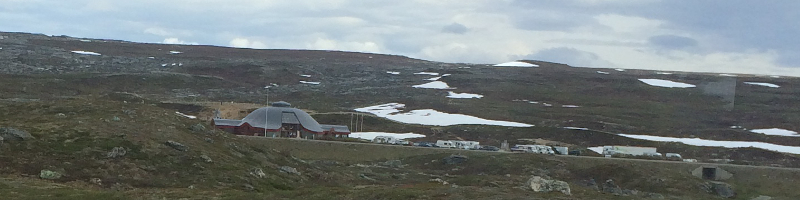

In northern Europe, a similar deforestation event occurred, since low-light and cold conditions limited the regrowth of trees. Today, conservationists in Iceland are replanting the trees which were harvest by the Vikings for their wooden fleets [10].
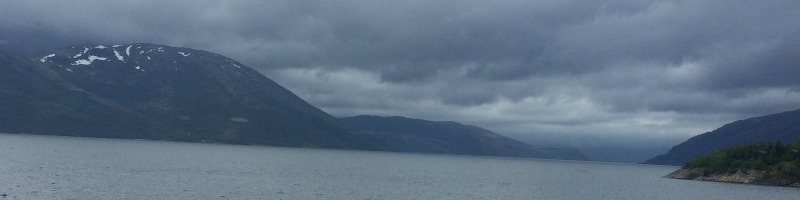
In modern times, landscape composition has been impacted by the infrastructure required by new technologies, a continued demand for wood, city planning and restoration. Rivers, mountains, and lakes also have shaped how humans have shaped the environment in Europe.

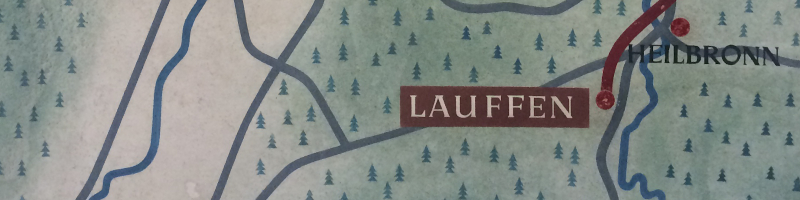
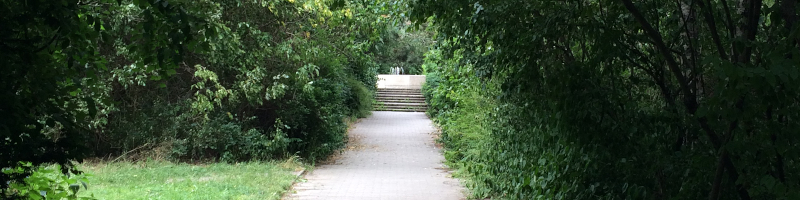


Restorations and preserves protect and expand the natural wealth of Europe from exploitation, as is also seen North America. Unlike North America, almost all of the protected forests are managed and few wild forests remain.

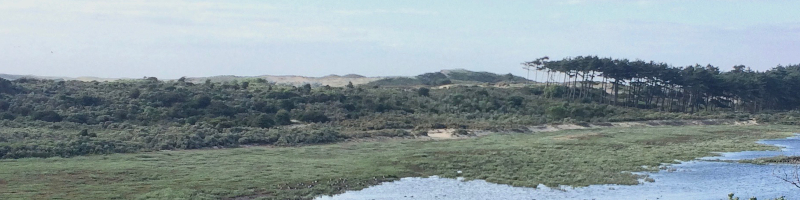


Wars have contributed to the destruction of sensitive ecosystems [11], and consumption of wood. Europe has suffered two wars involving direct international involvement, which has contributed severe pollution [12][13] and still poses threats to people there today [14][15].

For much of the world, Europe is defined by its cities’ architecture. They are surprisingly barren, which may have contributed to decline in life quality throughout the centuries. In recent years, increased temperatures have inspired the Parisian municipalities to plant 170,000 new trees to increase shaded cooler areas [16][17].

Amidst the concrete jungle of ornate buildings are vines, potted plants, and terraces, which add a temporary spice of life.
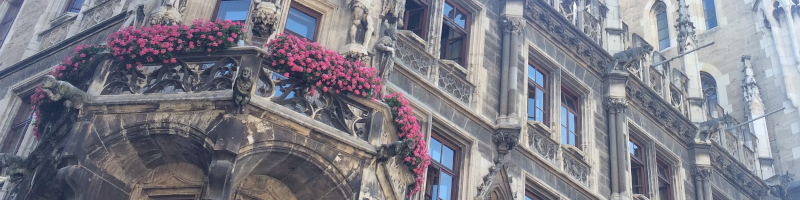
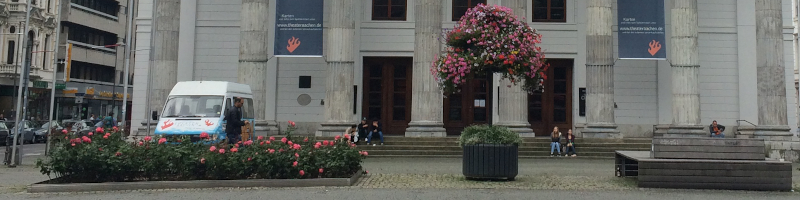
Europe’s wealth has contributed to its capacity to adapt to its cooler environment and altered landscape. Greenhouses once allowed British to grow pineapples[18], and continue to support the Dutch horticultural industry[19].


Agriculture
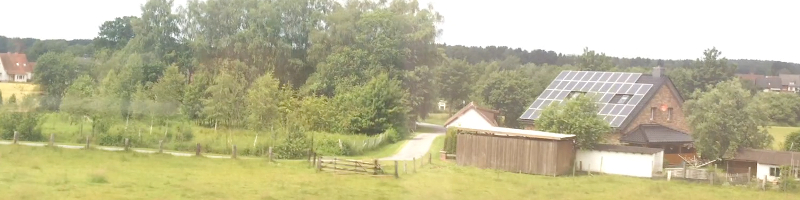
Agriculture derives from a latin phrase ‘field cultivation’, and is one of the most well known words around the world. In Roman times, the military would often be involved in agricultural operations, since higher ranked members would own and run large captured territories. Soldiers often were farmers during times of peace.


Since these times, agriculture has been a discipline, which can require the mindset of an engineer. The attitude of agriculture to use technology to morph and control the land is very strong in Europe, where large machines work the land.
These trends are shared with Canada and the US, since they have from their beginning been influenced by Central and Western Europe. However, Europe has become stricter in its protective regulations, which has curved negative consequences of pesticides on lifeforms. Many of the first companies to produce pesticides were repurposing their research from chemical warfare in Europe during World War 1 to agricultural solutions [20]. This change signals an important shift, which other industrialized nations should wisely consider emulating.
Horticulture

Horticulture, on the other hand, developed from the urban concept of the Roman ‘hortus’, which was a small enclosed garden, where a household would grow their necessities, primarily food, much like any sustenance garden in countries without access to large markets. Today these type of sustenance gardens exist in remote places in Africa, Asia and South America, and are studied by gardeners for their efficient and productive designs.
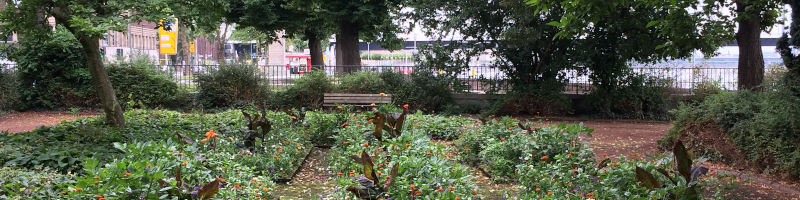
As knowledge of botany increased, these small gardens would become a pharmacy, or physic gardens, where gardeners helped doctors or monks cultivate medicinal plants.

Many of the plants bred and planted by gardeners in Europe would be brought from distant lands where gardening as we know it had commonly been practiced: Carrots from Afghanistan [21][22], tulips from the Ottoman empire [23], and more ancient introductions like apples from Kazakhstan [24].

In time, gardening became synonymous with what we would consider landscaping today: trimming of shrubs and the use of adornments created exclusive spaces for luxury. Due to the inequality experienced in many of these architecturally-dense environments, gardens were behind closed gates and the public who did not share the same sensitivities as the wealthy landowners did not have access.


Identity and Conflict
Due to many advantages, European empires accrued resources from the world, shaped the world to their image and continue to influence them today. Due to the disadvantages of a degraded environment, millions of humans left Europe in search for lands with more opportunities.
These two interactions between Europe and the world have resulted in many species leaving the continent and becoming invasive through human migration and trade.
The world views of the descendants of these migrants is oriented towards Europe, and often clashes with the environmental restrictions of their new homes.
Due to genocides, the knowledge of the original humans inhabiting the lands of migrants was lost. Many are more aware about Europe than they are of their current location. These traumatic events have caused much of the world to join Europe’s suffering.
Due to the legacy of Nazism in Europe, many are now aware of the danger of conflating the environment with ethnic and national identities. Due to how humans use plants and animals as symbols for their identity, it is difficult to separate the two. For this reason, Europe could provide leadership for understanding how this phenomena affects industrialized nations and cooperate with other lands to avoid generating ethnic conflict in the process of restoring their landscapes.

Salzburger Städtischen Museum, Austria. ~1910.
Wikimedia Commons [11a]
Author: Gustavo Meneses
Published: 2023-05-30
Revised: 2024-06-05
Reference
[1] Mina, Marco. The Return of the Forest: how trees reconquered the European continent after the last Ice Age, Forest Monitor, Aug 18 2017. Website. Accessed May 25, 2023. https://www.forest-monitor.com/en/the-return-of-the-forest/
[2] Pierce, Marc. The Book and the Beech Tree Revisited: The Life Cycle of a Germanic Etymology. Historical Linguistics, 2006, vol 119, pp.273-282. Vandenhoeck & Ruprecht (GmbH & Co. KG). https://www.jstor.org/stable/40849386
[3] O’Conner, PT. Kellerman, S. “Did ‘beech’ give us ‘book’?” Grammarphobia. May 4, 2018. Website. Accessed May 30, 2023. https://www.grammarphobia.com/blog/2018/05/beech-book.html
[4] Hilberth, Iris. “Bei Gewitter rät der Volksmund: Eichen sollst du weichen, Buchen sollst du suchen.” wissen.de. Website. Accessed May 30, 2023. https://www.wissen.de/bei-gewitter-raet-der-volksmund-eichen-sollst-du-weichen-buchen-sollst-du-suchen
[5] Musselman, Lytton John. “All the Plants of the Bible”. Old Dominion University. Feb 17, 2013. Website. Accessed May 30, 2023. https://ww2.odu.edu/~lmusselm/bible/allbibleplantslist.shtml
[6] Numbers 20:5. Sefaria. Website. Accessed May 30, 2023. https://www.sefaria.org/Numbers.20.5?ven=Torah_Yesharah,_translated_and_edited_by_Chas._Kahane._New_York,_1963&lang=bi&lookup=וּתְאֵנָ֤ה&with=Lexicon&lang2=en
- Instances of תְּאֵן in Genesis 3:7, and several in Numbers are translated into English as ‘fig’. The Hebrew word is cognate to contemporary Arabic word for fig, تِين. Other references in I Kings 10:27 & Isaiah 9:9 use a different word for fig, שִׁקְמָה , which is the root of the english word ‘sycamore’ (https://en.wiktionary.org/wiki/sycamore )
[7] Barthlott, W. Obholzer, J. Rafiqpoor, MD. “Pflanzen der Heiligen Bücher Bibel und Koran”. Bundesamt für Naturschutz (BfN), No. 448, 2016. ISBN 978-3-89624-185-6. Accessed May 30, 2023. https://www.bfn.de/publikationen/bfn-schriften/bfn-schriften-448-pflanzen-der-heiligen-buecher-bibel-und-koran
[8] Fuller, DQ. Stevens, C. “Between Domestication and Civilization: The role of agriculture and arboriculture in the emergence of the first urban societies”. Vegetation History and Archeobotany, vol 28, issue 3, May 2019. https://doi.org/10.1007/s00334-019-00727-4
[9] Hughes, J. Donald. “Environmental Problems of the Greeks and Romans: Ecology in the Ancient Mediterranean, Second Edition”, John Hopkins University Press, pp.78-82
- The study of analyzing charcoal remains is known as anthracology.
[10] McLendon, Russel. “How Iceland Is Regrowing Forests Destroyed by the Vikings”. Treehugger. May 1, 2020. Website. Accessed May 27, 2023. https://www.treehugger.com/how-iceland-regrowing-forests-destroyed-vikings-4864451
[11] Winternitz, André. “Generalshügel Lieberose”. rottenplaces. Dec 26, 2015. Website. Access May 30, 2023. http://www.rottenplaces.de/main/generalshuegel-warschauer-hoehe-lieberose-17870/
- Compare this highly disturbed barren with the more protected, Sandachse Franken.
- Sigrun, “Die Fränkische Wüste – Sandpflanzen der Sandachse Franken” Bergblumgarten. Website. Accessed May 30, 2023. https://www.bergblumengarten.de/die-frankische-wuste-sandpflanzen-der/
[12] “The Iron Harvest – A Warning from History”. Commonwealth War Graves, Dec 04, 2017. Website. Accessed May 30, 2023. https://www.cwgc.org/our-work/news/the-iron-harvest-a-warning-from-history/
[13] Hupy, JP. Schaetzl, RJ. “Introducing “Bombturbation,” a singular type of soil disturbance and mixing”. Soil Science, vol. 171, issue 11, pp. 823-836, Nov 2006. https://doi.org/10.1097/01.ss.0000228053.08087.19
[14] “Large, unexploded WWII bomb forces 2,500 to evacuate in Poland”. CBS News, May 26, 2023. Website. Accessed May 30, 2023. https://www.cbsnews.com/news/poland-bomb-world-war-ii-unexploded-ordnance-evacuations/
[15] “SS Richard Montgomery: The explosive facts about wreck full of bombs”. Echo News, Jun 6, 2020. Website. Accessed May 30, 2023. https://www.echo-news.co.uk/news/18498929.ss-richard-montgomery-explosive-facts-wreck-full-bombs/
[16] Ausloos, Manuel. “Heatwave in Paris exposes city’s lack of trees.” Reuters, Aug 5, 2022. Website. Accessed May 30, 2023. https://www.reuters.com/world/europe/heatwave-paris-exposes-citys-lack-trees-2022-08-04/
[17] Gantois, Marie. “Urban tree planning and planting in Paris”. The Global Platform for Sustainable Cities. Dec 1, 2022. PDF. Accessed May 30, 2023. https://www.thegpsc.org/sites/gpsc/files/1._marie_gantois-urbantrees-2022-12-01.pdf
[18] Lausen-Higgins, Johanna. “A Taste for the Exotic: Pineapple cultivation in Britain”. Historic Gardens, 2010. http://www.buildingconservation.com, Cathedral Communications Ltd. Website. Accessed May 30, 2023. https://www.buildingconservation.com/articles/pineapples/pineapples.htm
[19] Phillips, Susan. “The Netherlands Horticulture Market.” USDA Foreign Agriculture Service, Global Agricultural Information Network (GAIN) Report. Aug 3, 2016. PDF. Accessed May 30, 2023. https://apps.fas.usda.gov/newgainapi/api/report/downloadreportbyfilename?filename=The%20Netherlands%20Horticulture%20Market_The%20Hague_Netherlands_8-3-2016.pdf
[20] Wills, Matthew. “War and Pest Control” JSTOR Daily. Sept 6, 2018. Website. Accessed May 30, 2023. https://daily.jstor.org/war-and-pest-control/
[21] Stolarczyk, J. Janick, J. “Carrot: History and Iconography.” Acta Horticulturae, Chronica Horticulturae, vol. 51, no. 2. PDF. Accessed May 2023. https://www.actahort.org/chronica/pdf/ch5102.pdf#page=13
[22] Tyrell, Kelly April. “Carrot genome paints picture of domestication, could help improve crops.” May 9, 2016. Wisc News, University of Wisconsin – Madison. Website. Accessed May 30, 2016. https://news.wisc.edu/carrot-genome-paints-picture-of-domestication-could-help-improve-crops/
[23] Fry, Rachel R. “Gardens in the Air: A Reexamination of the Ottomon Tulip Age.” Gettysburg College, Nov 26, 2013. pp. 2-3. https://cupola.gettysburg.edu/cgi/viewcontent.cgi?article=1180&context=student_scholarship
[24] Daley, Jason. “How the Silk Road Created the Modern Apple” Smithsonian Magazine. Smart News. Aug 21, 2017. Website. Accessed May 30, 2023. https://www.smithsonianmag.com/smart-news/how-silk-road-created-modern-apple-180964521/
Images
[1a] Gmihail, “File:Hardiness zones of Europe.jpg”, Wikimedia Commons, Apr 19, 2021, https://commons.wikimedia.org/wiki/File:Hardiness_zones_of_Europe.jpg
[2a] Direct Normal Irradiation, Solar resource maps of World, SolarGIS. Website. Accessed May 27, 2023. https://solargis.com/maps-and-gis-data/download/world
[3a] Peel, M. C., Finlayson, B. L., and McMahon, T. A., “File:Köppen World Map (retouched version).png”. University of Melbourne. Wikimedia Commons. Website. Accessed May 27, 2023. https://commons.wikimedia.org/wiki/File:Köppen_World_Map_(retouched_version).png
[4a] Rearranged map from:
Mina, Marco. The Return of the Forest: how trees reconquered the European continent after the last Ice Age, Forest Monitor, Aug 18 2017. Website. Accessed May 25, 2023. . https://www.forest-monitor.com/en/the-return-of-the-forest/
[5a] Gulf Stream Velocities Archive, Department of Earth Observations and Space Systems (DEOS), Technical University of Delft. Website. Accessed May 25, 2023. http://rads.tudelft.nl/gulfstream/gif/
[6a] Caudullo, Giovanni. “File:Fagus sylvatica range.svg”. Apr 19, 2021. Wikimedia Commons.Accessed May 27,2023. https://commons.wikimedia.org/wiki/File:Fagus_sylvatica_range.svg
[7a] Maps: distributions. Ficus carica. Euro+Med PlantBase. Website. Accessed May 27, 2023. http://ww2.bgbm.org/EuroPlusMed/PTaxonDetail.asp?NameCache=Ficus%20carica&PTRefFk=7300000
[8a] Ficus palmata. Figweb.org. Website. Accessed May 27, 2023. http://www.figweb.org/Ficus/subgenus_ficus/section_ficus/subsection_ficus/Ficus_palmata.htm
[9a] Ficus sycomorus sycomorus. Figweb.org. Website. Accessed May 27, 2023. http://www.figweb.org/Ficus/Subgenus_Sycomorus/Section_Sycomorus/Subsection_Sycomorus/Ficus_sycomorus_sycomorus.htm
- The 800×200 image excludes the majority of the species’ distribution within the heart of Africa. Consider how the Nile River civilizations’ disturbance and Saharan post-glacial climate change may have disjoined the northern population.
- Also consider how ethno-linguistic and political affiliations influence these maps as they have influenced the separation of the United States and Canada from Mexico in botanical works, despite their ecological continuity.
[10a] Rudolphi, F. Pinaceaea. Angiosperm Phylogeny Website, version 14. Missouri Botanical Garden Research, https://www.mobot.org/MOBOT/research/APweb/orders/conifers.html#Pinales
[11a] “File:Perchtenmasken Salzburg.jpg”. before 1914. Salzburger Städtischen Museum. Wikimedia Commons. Accessed Dec 6, 2023. https://commons.wikimedia.org/wiki/File:Perchtenmasken_Salzburg.jpg
 PRO - Plant Research Organization

.png )

