
Draft: 2026-03-03
Work in PROgress.
Featured image: Blog owner’s family pet dogs, Lyle (background) and Brenda (foreground).

Agriculture isn’t just about cultivating plants in a field. Wild plants don’t exist in isolation, they belong to an ecosystem filled with many different types of organisms. Among them, animals stand out, because of their size and body plans, and their behavior. Animals have nervous systems and move, using their brains and muscles to make intelligent decisions and instinctual reactions.
Animals matter to humans, because they impress us. Early in the archeological record, humans first depicted animals in art. Many know how humans have domesticated animals, and through the process have developed close bonds and a sense of familiarity. However, animals have also always surprised humans through their overpowering dangerous strength, larger stature and explosive reactions. Even though humans hunted and tamed these animals, they’ve also admired them. The differences between in behavior of a wild animal and a domesticated animal vary, yet can also overlap. Regardless, animals have proven to be important in the systems, which support human potential. In certain climates where plants are scarce, humans have relied on animals for materials, and food. In other more hospitable climates, humans have had the choice to respect the lives of animals, and eat what they offer, such as milk from mammals, instead of killing them for their meat and bones. Often, humans eat less intelligent smaller grazing animals, rather than the most intelligent grazing animals or predatory animals. Animals rely on plants or on another herbivores. While the common ancestor of animals inherited the ability to move in order to consume other organisms, the common ancestors of plants satisfied its needs by consuming another organism and inheriting its function. Plants, however, were cursed and blessed by this event, since they now have no reason to move substantially. In this manner, plants and animals diverged, playing two different roles in the environment, which in our minds is easily recognizable.
Despite this, plants are drastically different from each other than animals are to themselves. Even though it appears to us, as they are very similar statue-like leafy flowery green things. Plants are complex less-mobile organisms, organized geometrically to complete its physiological functions. Just like blood is the most important and identifiable liquid in mammals, plants use two distinct solutions of water and nutrients to grow and live. These two solutions differ in their dissolved components, and spread across the bodies of plants in a variety of methods. The vascular system of plants is also morphologically diverse, with some plants using outward and upward growing rings and others using similarly growing scattered columns. Morphologically, this is much more diverse than the vascular systems found in animals. Even animals like insects, which don’t have blood, but instead green hemolymph, have structures, which appear morphologically like veins in mammals. These comparisons help us appreciate the differences between plants and animals, and how in many ways, animals are more similar to each other. Molecularly, however, animals are very different, and our immune systems and reproductive systems are incompatible, whereas our taxonomic system of plants allows many species of plants to hybridize, despite the idea that a species must be reproductively isolated. These differences make sense, when we look at the evolutionary history of plants and animals, based on their physiology, morphology, genetics and fossil record. Plants are much older, yet animals originate from a divergent ancestor, which experienced many selective events, which contributed to drastic changes, exacerbated by their own nervous systems, which allowed them to interact with the environment quickly. Ultimately, these observations are controlled by our own instincts and perceptions, which cause us to be interested more in the apparent details in animals and less in the hidden differences between plants. When we look at our environment, our brains quickly categorize lifeforms and distinguish them from more inanimate objects. However, many traditional societies lacked technical terms to describe these differences and talked about larger qualitative observations using concepts like spirits, to describe the characteristics or metaphysical properties of all objects in the environment, not just lifeforms. These archaic systems of observation were preserved through complex societal systems, which conflict with newer systems of observation or non-conforming behaviors, often regardless of their function. For this reason, science has inspired a new vocabulary, which seeks to describe the world precisely. Though the word animal has been accepted, its origins began in the vague observations of spirit, in terms of breath and movement (ex: animation, animate). *Spanish: ánimo (mood, spirit, emotion, willingness)*
Because animals need to consume other organisms, they developed unique organs to sense their prey. One of the most important organs, besides a brain, are the eyes. Vision has helped animals distinguish items in the environment and react to them. However, not all animals use vision. Many cave or nocturnal animals have lost their vision and use other senses, like hearing and feeling.Not all animals see the same way. Some animals perceive only a more limited spectrum of energy than humans, and others more, equal or less, yet different electromagnetic wavelengths. Similarly, animals can perceive the same or different vibrations, or chemical reactions we call scent. Humans have domesticated animals like dogs, which have greater ability to smell and discern certain compounds. Smell is a unique sense, since it requires inhalation, and can result in exposure to dangerous substances. For these reason, chemists are advised not to smell substances, rather they waft the air, which dilutes its concentration, or abstain from smelling through changes in behavior or protective clothing.


Excerpt or commentary from Book of Exodus (Sh’mot) in Hebrew. Surah al-Baqarah (The Cow) from Qur’an. Surah al-An’am (The Cattle, lit. Pleasant Things).
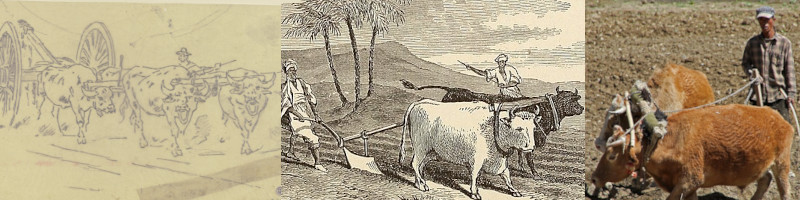
A yoke is a wooden structure placed around necks of animals in order to use their strength and control their collective movement. Animals have been traditionally used to move plows and vehicles. For this reason, there exists a unit of measurement called “horse power”.
שמות לד:יד כִּי לֹא תִשְׁתַּחֲוֶה לְאֵל אַחֵר כִּי יְ־הוָה קַנָּא שְׁמוֹ אֵל קַנָּא הוּא.
Exod 34:14 For you must not worship any other god, because YHWH, whose name is Impassioned, is an impassioned God.
Source: childhood friend and https://www.thetorah.com/article/yhwh-the-original-arabic-meaning-of-the-name
Baghavad Gita, Chapter 10, Verse 8
अहं सर्वस्य प्रभवो मत्त: सर्वं प्रवर्तते |
इति मत्वा भजन्ते मां बुधा भावसमन्विता: || 8||I am the origin of all creation. Everything proceeds from Me. The wise who know this perfectly worship Me with great faith and devotion.
Source: @AndrewDouglasMoon at https://youtube.com/@andrewdouglasmoon?si=f2YNPrP0rUTrlvMF and https://www.holy-bhagavad-gita.org/chapter/10/verse/8/
Gospel of Matthew 22:37-39 (BibleHub)
Stephanus Textus Receptus 1550
37. ὁ δὲ Ἰησοῦς εἶπεν αὐτῷ, Ἀγαπήσεις κύριον τὸν θεόν σου ἐν ὅλῃ τῇ καρδίᾳ σου καὶ ἐν ὅλῃ τῇ ψυχῇ σου καὶ ἐν ὅλῃ τῇ διανοίᾳ σου·. 38. αὕτη ἐστὶν πρώτη καὶ μεγάλη ἐντολή. 39. δευτέρα δὲ ὁμοία αὐτῇ Ἀγαπήσεις τὸν πλησίον σου ὡς σεαυτόν.
New World Translation (JW app)
37 He said to him: “‘You must love Jehovah your God with your whole heart and with your whole soul and with your whole mind.’ 38 This is the greatest and first commandment. 39 The second, like it, is this: ‘You must love your neighbor as yourself.’
Qur’an, Surah al-BayyinahChapter 89, Clear Proof (Islamicity.org)
وَمَآ أُمِرُوٓا۟ إِلَّا لِيَعْبُدُوا۟ ٱللَّهَ مُخْلِصِينَلَهُ ٱلدِّينَ حُنَفَآءَ وَيُقِيمُوا۟ ٱلصَّلَوٰةَوَيُؤْتُوا۟ ٱلزَّكَوٰةَ وَذَٰلِكَ دِينُ ٱلْقَيِّمَةِ
Muhamad Asaud’s translation
And withal, they were not enjoined aught but that they should worship God, sincere in their faith in Him alone, turning away from all that is false; and that they should be constant in prayer; and that they should spend in charity: for this is a moral law endowed with ever-true soundness and clarity.
Although we consider humans and animals to be distinct categories of living beings, humans are technically animals. This popular distinction
has its roots in our oldest narratives. The word ‘human’ related to the word ‘man’, which originally was gender neutral and represented sentience. Similar to the Hebrew word ‘אדם’ or ‘Adam’ (man, humanity; lit. clay, earth), the word ‘Man’ also represented an ancient ancestor in the ancient religions of Germanic language speaking peoples.
As our observational and communication methods increase, due to interactions between societies, we find that animals share many of the traits we considered to be only found in humans. For example, some species of ants farm fungi and milk aphids for their sugary frass. Regardless of these comparisons, humans are unique in their abilities and intrinsic features.
Societies have tried to answer the question, “Why do we do the wrong thing?” For thousands of years, we have lost some of the best answers to these questions, because of the confusion caused by war & other forms of violence.
In Kemet (Ancient Egypt), human behavior was defined in a 5-part allegory, as well as 2-part complementary allegory. These narratives have been studied and taught by individual people like Baba Heru, Dr. Asa Hilliard, Chester Higgins, and Ashwar Kwesi.
The 5-part allegory consists of an ancestral family in the sky and their descendant: you, the observer. The 4 ancestors each represented star systems in the sky, which helped them navigate. They also represented aspects of nature; roles within an ecological web of relations. The father represented wisdom and plants, the mother represented water and fertile soil, the father’s brother represented war and desertification, and the mother’s sister may have represented assistance and guidance. As descendant, we observed the cosmic familial conflict that explains the reason for our suffering and cooperative methods of survival.
The 2-part complementary allegory, places the observer and the father’s brother’s opposer archetypical roles over the psyche.
While around 40% of Earth’s land is used by humans to cultivate plants, 90% of all animals on Earth are domesticated by humans. For many different reasons, our interactions with animals have made greater impression on our psyche and therefore we struggle to manage them.
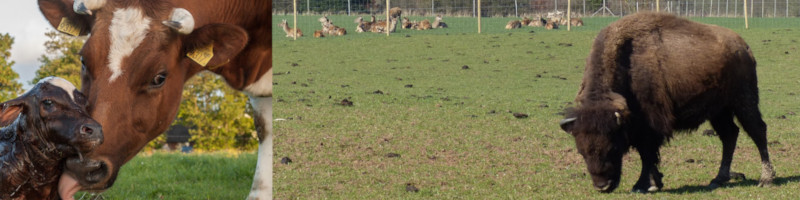
Wild animals, especially carnivores like lions, tigers and wolves, are seen as threats to human resources, even though they play a role in the ecosystem. However, carnivores aren’t the only type of animals we struggle to get along with, big animals like elephants, buffalo, and cows, have all been victims to excessive hunting.
Animals thrive within a niche, where they are not in excessive competition with another animal. In an isolated environment, like a continent on the other side of Earth, an island in a middle of an ocean, or a valley surrounded by mountains, animals can live in relative peace without excessive predation. However, because humans in the Nile River required sail boats, people like Christopher Columbus inherited 1,000’s of years of sailing technology and crossed the ocean with enough feasibility and during a time of over-development, necessity and dysfunction in Europe, so that humans began to hunt isolated populations of animals like the Dodo bird.
While we often focus on the extinction events caused by the Columbus exchange, primarily by European colonists, extinctions of large animals had occurred in North America with the arrival of humans from Asia. Similar extinctions occurred when humans travelled into deglaciated Europe from Central Asia after leaving Africa.
Africa is one of the largest continents in the world, much more than the area of the USA, so there was plenty space for wild animals to co-exist. Likewise, human technology develops out of necessity, not necessarily ingenuity, and that made human populations outside of Africa in the polar regions, especially those connected to other cultures through rivers and seas, exceptionally dependent on technological methods of survival and more of a threat to wild animal populations, since the benefit of the lifestyle provided individuals enough time to hunt excessively.
Before National Parks existed, descendants of colonists had believed there was no reason to not hunt or fell trees, except if they were at risk of attack by Native Americans. The concept of managing natural resources was not a major value in society, partially because instead of suffering the consequences and feeling the pressure, colonists spread to new lands where resources felt unlimitedly abundant.
However, in Europe, there were sacred forests and royal estates, where hunting or felling trees was forbidden, yet not necessarily for the same reasons. The religious and classist reasoning for protecting natural resources caused that when changes occurred in those spheres, like religious conversion or political revolution, resource management strategies changed substantially.
In the case of religion, polytheistic religions that seemed to have formed from archaic languages and symbolism tended to control resources through cult worship. For example, in Kemet the cult of Ptah, the potterwheel deity, must’ve influenced how ceramics were made. If one created ceramic objects, they would be pressured by the ceramic cult. Ceramics in Greece, one of the main economic partners of Kemet, is known to consume vasts amount of wood for baking clay to turn it hard. Ash deposits near kilns show the depletion of tree species up the forest hill slopes. A religion might put great emphasis on one thing, yet fail to take care of dependent and connected resources. However, for the objects of worship, they might dedicate attention, like a certain type of animal.
Monotheistic religions have come into conflict with these behaviors. Often destroying plants or animal specimens that receive worship. For example, Bonafatius felled a tree associated with Thor (Germanic deity, letter in Futhark writing system; lit. giant, dangerous) in order to prove that his 1 universal deity called God was true and Thor false. Given enough time and dialogue, such destructive events could’ve been prevented.
However, religion is not the only way humans have associated themselves to certain kinds of animals. Clans, tribes, and families, with stories or symbols like Crests, have associated themselves to certain animals. Sometimes fictitious animals like dragons, which some speculate could’ve been inspired by dinosaur fossils.
Animals are so easily recognized by humans that we often use a combination of features from different animals to create fictitious animals or monsters. This symbolic use of animal body plans is often logically inspired. For example, while horns are often associated with ‘the Devil’ in many of our societies today, horns are a symbol of maturity and strength in the Bible and also in many pagan religions. In certain cults like the cult of Pan, the animalistic features were used to legitimize abusive forms of sex. Therefore, the symbols of these cults would then become symbolic of danger and evil for those who wanted to avoid destruction and sustain themselves.
When we think of animalistic behavior, we tend to think of destructive behaviors. When humans behave like an animal, we mean that pejoratively. What we really mean is that we compare ourselves with aggressive and destructive animals, yet smart and benign animals are often metaphorically compared on a species by species basis. For example, owls are associated with wisdom, yet not all birds. To say someone is wise like an owl, does not invoke any insult that could be associated with owl’s very strange habits. Some people might use another phrase like night-owl to refer to someone, who lives nocturnally like an owl. Owls are one type of animal that are affected by over-development, because of deforestation and light-pollution.
Because of our similarities to other primates, the most common insult among humans is to compare ourselves with apes or monkeys. However, in certain cultures primates are considered helpful in some manner and would have a positive attribute, like an owl would be considered wise. Even so, not all humans live in proximity with other primates, therefore humans have also compared themselves to other animals with similar lifestyles, such as bears.
Yet, the comparison can also go the other direction. Because of our familiarity with certain animals, we often project human-like qualities onto pets like cats and dogs, and create caricatures of animals like Bugs Bunny and Mickey Mouse. These simplifications of animals may have contributed to zoos, which in most cases house animals in destructively limited spaces, for our amusement.
Zoos are spaces where zoologists, a biologist focused on animals, mostly larger animals, may have to also learn about plants, because they have to learn how to simulate the animal’s original environment and how to properly feed it.
Many animals are omnivores, herbivores detrivores, which might rely on plants directly for survival. Even carnivores rely on plants indirectly for their dietary needs and rely on plants for other purposes such as hunting strategies and habitat.
References
2025-02-24_PRO_Animals
Bodmer, Karl. “File:Dog with travois. Detail of Karl Bodmer painting – A Skin Lodge of an Assiniboin Chief.jpg”. Jan 2, 1844. Wikimedia Commons. Accessed Feb 24, 2025. https://commons.wikimedia.org/wiki/File:Dog_with_travois.Detail_of_Karl_Bodmer_painting-_A_Skin_Lodge_of_an_Assiniboin_Chief.jpg
Curtis, Edward S. “File:Nez Perce warrior on horse.jpg”. 1907. Wikimedia Commons. Accessed Feb 24, 2025. https://commons.wikimedia.org/wiki/File:Nez_Perce_warrior_on_horse.jpg
Fascione, Mat. “File:Buffalo near Hill Farm – geograph.org.uk – 3500012.jpg”. April 20, 2013. Wikimedia Commons. Accessed Feb 24, 2025. https://commons.wikimedia.org/wiki/File:Buffalo_near_Hill_Farm_-geograph.org.uk-_3500012.jpg
Kürschner. “File:Weich Couture Alpaca, Düsseldorf, December 2020 (14).jpg”. Dec 11, 2010. Wikimedia Commons. Accessed Feb 24, 2025. https://commons.wikimedia.org/wiki/File:Weich_Couture_Alpaca,D%C3%BCsseldorf,_December_2020(14).jpg
McHugh, Molly. “File:Taking Alpaca or Llama Hides to the Market in Chivay, Peru.jpg”. Feb 22, 2000. Wikimedia Commons. Accessed Feb 24, 2025. https://commons.wikimedia.org/wiki/File:Taking_Alpaca_or_Llama_Hides_to_the_Market_in_Chivay,_Peru.jpg
Dréo, Johann. “File:Unshorn alpaca grazing.jpg”. Jun 26, 2007. Wikimedia Commons. Accessed Feb 24, 2025. https://commons.wikimedia.org/wiki/File:Unshorn_alpaca_grazing.jpg
“File:Maler der Grabkammer des Sennudem 001.jpg”. circa 1200 BCE. Wikimedia Commons. Accessed Feb 24, 2025. https://commons.wikimedia.org/wiki/File:Maler_der_Grabkammer_des_Sennudem_001.jpg
SimiChelsea. “File:IMG Dairy cow – at Sgola April 2024. jpg.jpg”. Apr 3, 2024. Wikimedia Commons. Accessed Feb 24, 2025. https://commons.wikimedia.org/wiki/File:IMG_Dairy_cow_-_at_Sgola_April_2024._jpg.jpg
Gonsalves, Timothy A. “File:Milking Cow Krishna Mandapa Mahabalipuram Sep22 A7C 02515.jpg”. Sept 15, 2022. Wikimedia Commons. Accessed Feb 24, 2025. https://commons.wikimedia.org/wiki/File:Milking_Cow_Krishna_Mandapa_Mahabalipuram_Sep22_A7C_02515.jpg
Uberprutser. “File:New born Frisian red white calf.jpg”. Jun 1, 2013. Wikimedia Commons. Accessed Feb 24, 2025. https://commons.wikimedia.org/wiki/File:New_born_Frisian_red_white_calf.jpg
“File:SlaperdijkHondsbossche.jpg”. Jul 16, 2006. Alchetron. Accessed Feb 24, 2025. https://commons.wikimedia.org/wiki/File:SlaperdijkHondsbossche.jpg
Uberprutser. “File:Cows on German sleeper dike.jpg”. Jul 28, 2013. Wikimedia Commons. Accessed Feb 2, 2024. https://commons.wikimedia.org/wiki/File:Cows_on_German_sleeper_dike.jpg
محمد أبي بك .”File:Quran page – Al-Baqara Sura – Egyptian National Library.jpg”. 1715. Wikimedia Commons. Accessed Feb 24, 2025. https://commons.wikimedia.org/wiki/File:Quran_page_-Al-Baqara_Sura-_Egyptian_National_Library.jpg
Ahmed Karahisari. “File:A page from the chapter al-An‘am written by Ahmed Karahisari (TIEM 1443).jpg”. circa 1550. Wikimedia Commons. Accessed Feb 24, 2025. https://commons.wikimedia.org/wiki/File:A_page_from_the_chapter_al-An%E2%80%98am_written_by_Ahmed_Karahisari_(TIEM_1443).jpg
“File:Hebrew Pentateuch (The S.S. Teacher’s Edition-The Holy Bible – Plate VIII).jpg”. Wikimedia Commons. Accessed Feb 24, 2025. https://commons.wikimedia.org/wiki/File:Hebrew_Pentateuch_(The_S.S.Teacher%27s_Edition-The_Holy_Bible-_Plate_VIII).jpg
de Brailes, William. “File:William de Brailes – The Crossing of the Red Sea (Exodus 14 -26-30) – Walters W10610R – Full Page.jpg”. circa 1250. Wikimedia Commons. Accessed Feb 24, 2025. https://commons.wikimedia.org/wiki/File:William_de_Brailes_-The_Crossing_of_the_Red_Sea(Exodus_14_-26-30)-_Walters_W10610R-_Full_Page.jpg
Rauch, Johann Nepomuk. “File:Yoke of oxen (SM 16214z).png”. Wikimedia Commons. Accessed Feb 24, 2025. https://commons.wikimedia.org/wiki/File:Yoke_of_oxen_(SM_16214z).png
Angus, Joseph. Madden, Frederic W. “File:The Bible hand-book- an introduction to the study of Sacred Scripture (1883) (14592963290).jpg”. 1883. Wikimedia Commons. Accessed Feb 24, 2025. https://commons.wikimedia.org/wiki/File:The_Bible_hand-book-an_introduction_to_the_study_of_Sacred_Scripture(1883)_(14592963290).jpg
Eichmann, Gerd. “File:Tibet-Agriculture-36-Pfluegen mit Ochsengespann-2014-gje.jpg”. May 23, 2014. Wikimedia Commons. Accessed Feb 24, 2025. https://commons.wikimedia.org/wiki/File:Tibet-Agriculture-36-Pfluegen_mit_Ochsengespann-2014-gje.jpg
Mythilinadaraj. “File:Cow feeding image.jpg”. Aug 27, 2023. Wikimedia Commons. Accessed Feb 24, 2025. https://commons.wikimedia.org/wiki/File:Cow_feeding_image.jpg
 PRO - Plant Research Organization


.jpg)
.png)

